
An ongoing research study.
Augmenting analog play with AI-imagined haptics

Hop Scotch is a reimagined version of everyone’s favorite childhood game, designed to bring back the kid in you and engage people of all ages! The twist: players get haptic feedback from the floorboards to know where to go next, adapting to intuitive cues and natural learning.
Hi! I'm Kashish :)
I like to tell stories through art and design.
As a recent implant into Dumbo, I am extremely inspired by the design culture here, and am motivated to bring a piece of my work into this neighborhood.
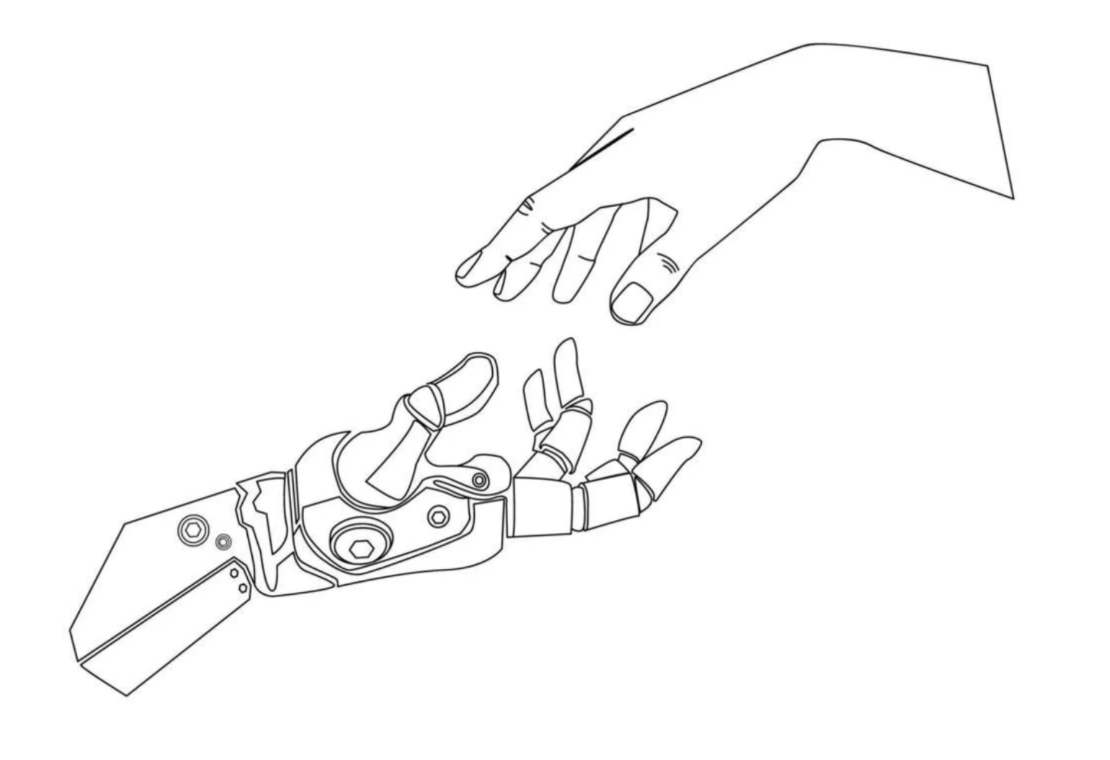
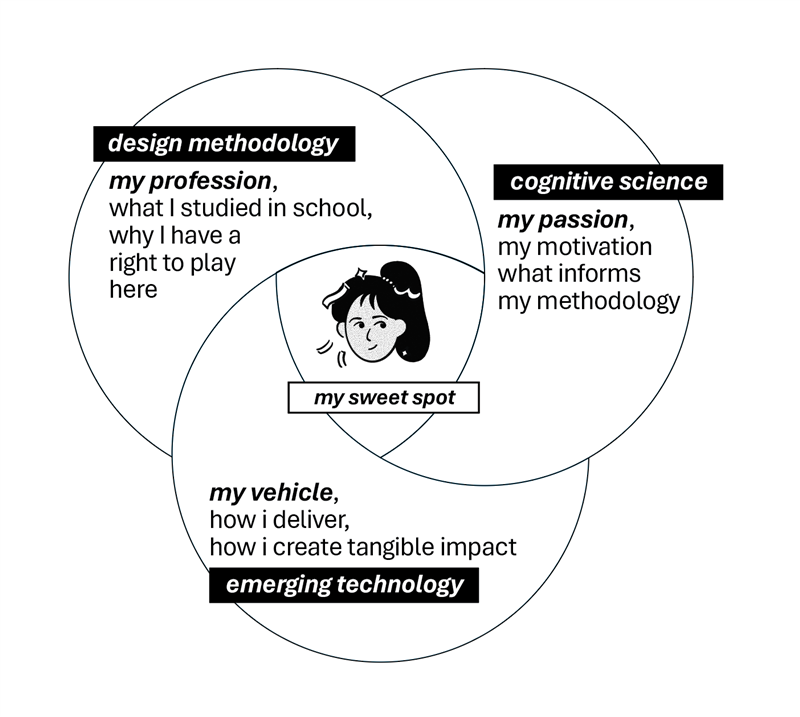
For the last few years, I have been researching the impact of Artificial Intelligence on human emotion, creativity, and intuition.
Most importantly, how can AI-powered, screen-free interfaces help people unlearn old patterns, learn new ones, and build trust and flexibility in human-AI interaction?
For the Six Foot Platform, I want to design for an instance of my research. I want to gamify this experience. Through the power of play, we invite and intrigue users, and through the haptic interaction and feedback, we keep them engaged.
The goal is for the participants to understand that there can be sweet spot between digital and analog life, and that staring into screens is not how technology is experienced best!
Each “square” is made up of a padded piece (similar to a yoga mat), with a haptic feedback generator and a pressure sensor. There is a speaker nearby to emit sound.
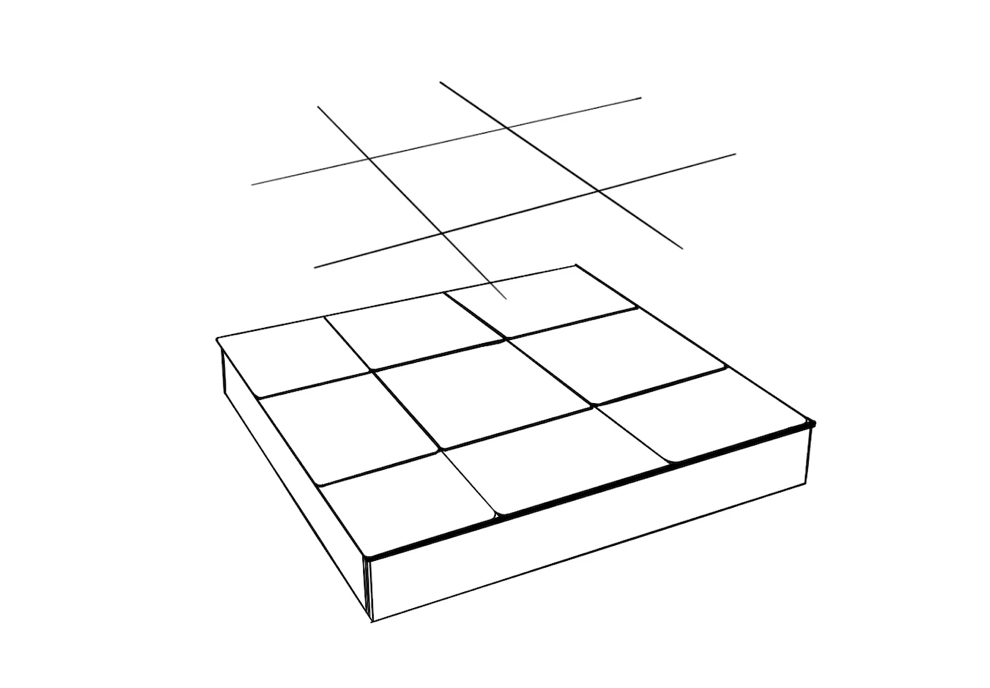
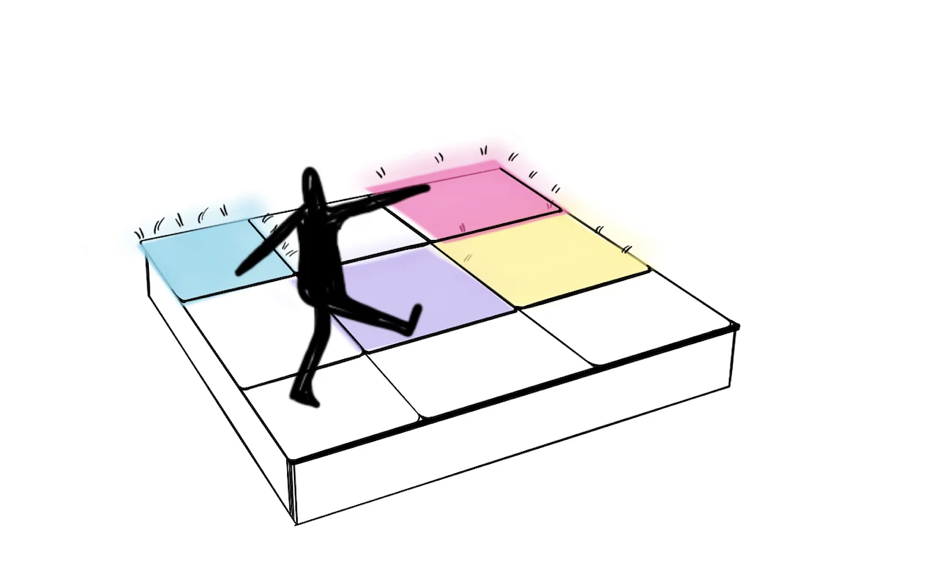
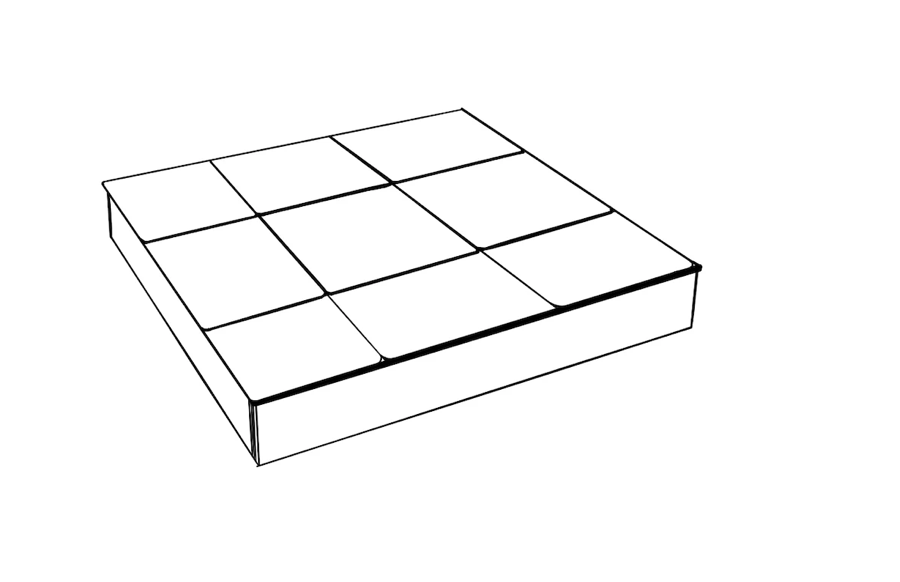
The pads are placed in a set pattern, and an AI algorithm creates each instance of the game at random. The goal is to inform the participant to jump from one pad to another through cues outside of the regular ones.
We will use a combination of haptic feedback and sound to define things like “next move”, “right move”, “wrong move” – experimenting with the combinations till the interactions seem intuitive.
A good example of this is how your whole vibrates/sounds different for a text message vs an instagram notification- you know intuitively (without looking at your screen) which one it is based on the cues your brain is receiving.
These next set of pictures describe the simple goal – guide users from one pad to the other through non-verbal cues.
I am still experimenting with this algorithm to understand the best combinations of haptics and sounds to achieve this – but rather than using obvious cues like “go from the yellow pad to the pink pad”, I want the participant to be able to experiment and have fun – figure the game out for themselves.

Simply put, I want to create a powerful participant experience that – even if for a moment – encourages them to be fully present in the game even in the midst of the chaos and hustle of Washington Street.
Through this, I want my art to encourage more screen-less Human Computer Interactions.
